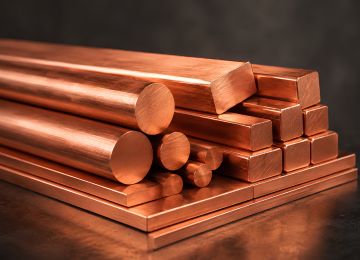
Copper
DS / 01
Non-Ferrous Metals
DIVYASHAKTI STEEL ENGINEERED MATERIAL SOLUTIONS
PRODUCT 01

Non-Ferrous Metals

Copper

Highly conductive copper suitable for electrical, thermal and industrial applications requiring reliable performance.

MATERIAL CATEGORY Non-Ferrous Metals
KEY PROPERTIES 4
APPLICATIONS 5+
02

PRODUCT
OVERVIEW

PRODUCT OVERVIEW

Material designed for demanding applications.

Material selection starts with understanding the application, required performance and operating conditions.

Copper is widely used because of its excellent electrical and thermal conductivity, corrosion resistance and workability. It is suitable for electrical, thermal and industrial applications.

Copper can be considered according to the specific material grade, dimensions, quantity, application and supply requirements associated with your project.

DIVYASHAKTI STEEL Performance
meets precision.

Talk to our team about the material specification you require.

Discuss your requirement

MATERIAL PROFILE

Built around performance.

Explore the characteristics and applications that make this material suitable for industrial requirements.

03

KEY PROPERTIES

Performance characteristics

01

Excellent electrical conductivity

Material characteristic relevant to performance and application.

Excellent electrical conductivity is an important characteristic to consider when evaluating the suitability of Copper for a specific engineering or industrial requirement. The actual suitability depends on the selected grade, operating conditions and intended application.

Discuss this requirement
02

Excellent thermal conductivity

Material characteristic relevant to performance and application.

Excellent thermal conductivity is an important characteristic to consider when evaluating the suitability of Copper for a specific engineering or industrial requirement. The actual suitability depends on the selected grade, operating conditions and intended application.

Discuss this requirement
03

Good corrosion resistance

Material characteristic relevant to performance and application.

Good corrosion resistance is an important characteristic to consider when evaluating the suitability of Copper for a specific engineering or industrial requirement. The actual suitability depends on the selected grade, operating conditions and intended application.

Discuss this requirement
04

Highly workable

Material characteristic relevant to performance and application.

Highly workable is an important characteristic to consider when evaluating the suitability of Copper for a specific engineering or industrial requirement. The actual suitability depends on the selected grade, operating conditions and intended application.

Discuss this requirement
04

APPLICATIONS

Common applications

01

Electrical components

Typical industrial application for this material.

Electrical components can make use of the relevant properties of Copper where the material characteristics align with the required operating conditions, dimensions and performance expectations.

Discuss this application
02

Busbars

Typical industrial application for this material.

Busbars can make use of the relevant properties of Copper where the material characteristics align with the required operating conditions, dimensions and performance expectations.

Discuss this application
03

Heat transfer systems

Typical industrial application for this material.

Heat transfer systems can make use of the relevant properties of Copper where the material characteristics align with the required operating conditions, dimensions and performance expectations.

Discuss this application
04

Industrial equipment

Typical industrial application for this material.

Industrial equipment can make use of the relevant properties of Copper where the material characteristics align with the required operating conditions, dimensions and performance expectations.

Discuss this application
05

Fabrication

Typical industrial application for this material.

Fabrication can make use of the relevant properties of Copper where the material characteristics align with the required operating conditions, dimensions and performance expectations.

Discuss this application

WHERE IT FITS

Choose the material around the requirement.

Every application has different priorities. Understanding the requirement helps determine the appropriate material, form and specification.

01

Material grade

The required grade can be considered according to the application's mechanical and performance requirements.

Material grade selection can depend on strength, hardness, toughness, wear resistance, corrosion resistance, machinability and other requirements relevant to the intended use.

Discuss material grade
02

Dimensions & form

Bars, sheets, pipes and other material forms can be selected around the component or process.

Dimensions, section size, thickness, length and material form can influence manufacturing, machining, fabrication and overall suitability for the intended application.

Discuss dimensions
03

Operating conditions

Temperature, loading, friction, impact and environment can influence material selection.

Understanding how and where the material will operate helps determine which characteristics are most important for the application and which grade should be considered.

Discuss operating conditions
04

Quantity & supply

Supply planning can be discussed around the required quantity, form and specification.

Share the quantity, dimensions, material requirements and other relevant details with our team so the supply requirement can be understood clearly.

Discuss supply
05

LOOKING FOR COPPER?

Let's discuss your requirement.

Tell us the grade, dimensions, quantity, application or specification you need and our team can take the enquiry forward.
DS STEEL & METAL

EXPLORE THE RANGE

Find the right material
for the next requirement.

View all products